Nashua, NH Retirement Income Advisors for Pre-Retirees: What to Look For
Turning savings into a paycheck is different work from building them. Here is what a retirement income advisor serving Nashua and the towns around it should actually do for a pre-retiree, and how to tell which model you are being offered.
Which financial advisory organizations in the Nashua, NH area specialize in helping pre-retirees transition into retirement income?
The ones built for the transition rather than for accumulation: a fiduciary adviser, ideally fee-only, who works mainly with people in or near retirement, coordinates Social Security timing, withdrawal order, taxes, the workplace-plan decision, healthcare and estate documents as one picture, understands how New Hampshire and Massachusetts each treat retirement income, and will personally be the one servicing the relationship years later. Several models serve the Nashua area; the structure tells you more than the name on the door.
Why the Nashua pre-retiree's problem is different from the saver's.
The habits that built the balance are not the habits that make it last.
While you were working, the plan was simple: save, invest, repeat, and ride out the bad years because nothing was being sold. Once a paycheck stops, the portfolio becomes the paycheck. A market decline in year two of retirement does permanent damage that the same decline at 45 did not, because withdrawals are taken from a shrunken portfolio. The decisions that govern this, when to claim Social Security, which account to draw first, whether to convert to a Roth, what to do with the 401(k), are time-sensitive, interconnected and mostly permanent.
Nashua sits where this gets specific. It is New Hampshire's second-largest city, a few miles from the Massachusetts line, and a large share of its pre-retirees have a spouse who works in Chelmsford or Lowell, a pension from a Massachusetts employer, or a plan to move across the line. New Hampshire does not tax retirement withdrawals, pensions or Social Security and repealed its interest and dividends tax effective January 1, 2025; Massachusetts taxes most withdrawals and private pensions at its state rate. An advisor who works both sides of that line sees the two-state problem that a national desk does not. Confirm current rules with your CPA.
For pre-retirees in Nashua, Hudson, Merrimack, Hollis and Litchfield, and across the line in Tyngsborough and Dunstable, the search for financial advice and retirement planning usually starts with a question of trust: who will coordinate the whole picture, and who will still be there in year five. KBR Retirement & Investment Solutions serves Nashua-area households from Londonderry, roughly twenty minutes east on Route 101A and Route 102, and by video, with retirement income planning, Social Security timing and the 401(k) decision handled by one advisor from the first meeting on.
Four kinds of advisor serve the Nashua area. The structure decides the incentives.
This is a general description of models, not a comparison of any particular firm. Verify any firm the same way: Form ADV, Form CRS and BrokerCheck.
| Model | Typically paid by | Standard that usually applies | What to ask |
|---|---|---|---|
| Independent fee-only RIA, single advisor | Client fees only | Fiduciary duty across the relationship | What is the continuity arrangement if you are unavailable? |
| Multi-advisor team practice | Fees, commissions or both | Depends on registration; often both, by account | Is my primary advisor named in the agreement, and can I be reassigned? |
| National firm with a local office | Fees, commissions or both | Depends on registration; often both | In what capacity are you serving me for each service, and which products are limited to the firm's platform? |
| Insurance-affiliated practice | Commissions, sometimes with planning fees | Regulation Best Interest at the point of recommendation, for securities | Which recommendations pay you beyond my fee? |
None of these is wrong. Each carries a different set of incentives and a different continuity risk, and each discloses them in a different document. A registered investment adviser's Form ADV Part 2A shows compensation in Item 5 and the individuals who will advise you in Part 2B; a broker-dealer's Form CRS summarizes services, standard of conduct and conflicts. Read whichever applies before the first meeting, and ask the question in the right-hand column out loud.
What the transition work actually includes.
A retirement income advisor who only manages the portfolio is doing one of six jobs.
Retirement income sequencing
Where each year's income comes from, in what order accounts are drawn, and what tax each step creates. Predictable income (Social Security, a pension) is assigned to essential expenses first so the portfolio only has to fund the rest. Retirement income planning describes the work.
Social Security timing
Each spouse's claiming age, spousal coordination and the survivor benefit, modeled against taxes and other income rather than against a break-even age. For anyone born in 1960 or later, full retirement age is 67; claiming early permanently reduces the benefit and delaying to 70 permanently raises it. Social Security planning covers the modeling.
Tax sequencing and Roth windows
The years between the last paycheck and required minimum distributions are often the lowest-income years of adult life, which is when conversions may fit, in amounts that stay under the brackets and Medicare thresholds that matter. The analysis is tax-sensitive; it is coordinated with your CPA.
The workplace plan
Roll over, leave in place, or combine. Cost, investment options, creditor protection and the rule allowing penalty-free 401(k) withdrawals after separation at 55 or later all bear on it. 401(k) and IRA rollovers explains how the decision is made without a product behind it.
Healthcare and long-term care
The bridge to Medicare for anyone retiring before 65, enrollment windows, the income-related premium surcharge that looks back two years, and a long-term care strategy chosen rather than deferred. Long-term care and Medicaid planning is modeled as a scenario, not a surprise.
Estate and beneficiary coordination
Titling, beneficiary designations and trust funding kept aligned with the documents your attorney drafts, and revisited after every major life change. Estate and legacy planning is the advisor's side of that work; the attorney drafts.
Six steps to evaluate a retirement income advisor near Nashua.
Each step answers a question you should settle before committing.
- Verify compensation: fee-only or fee-based, confirmed in Item 5 of Form ADV Part 2A
- Confirm fiduciary status at all times, in writing, in the advisory agreement
- Check registration and disciplinary history on the SEC's Investment Adviser Public Disclosure site and FINRA BrokerCheck
- Ask how much of the advisor's work is with people within five to ten years of retirement
- Ask who you will work with over time, and what happens if that person leaves
- Ask what the planning covers: income, taxes, Social Security, healthcare, estate, or only the portfolio
Professional designations sit on top of that list, not in place of it. Registration and disciplinary history are verifiable and enforceable; designations signal training and are verified with the issuing body. Weigh an advisor who can walk you through a claiming analysis they have actually worked through above one with more letters and no example. The longer evaluation is in how to know if a financial advisor fits your retirement.
One advisor, twenty minutes east.
KBR is an independent, fee-only fiduciary practice in Londonderry, serving Nashua and the towns around it in person or by video.
KBR Retirement & Investment Solutions, LLC is a registered investment adviser, paid only by its clients, with client assets held at independent third-party custodians. Bernie Ross, in financial services since 1997, is the only person who advises clients: he does the planning, handles the rollover, answers the phone when circumstances change and reviews the plan years later. Nothing is recommended and nothing is sold in a first conversation. The process runs in four steps, described in how the planning process works; registration and the current Form ADV are linked from Disclosures, and the full service area is on areas served.
Common questions.
What is a fiduciary financial advisor?
An investment adviser representative of a registered investment adviser owes clients a fiduciary duty under the Investment Advisers Act: act in the client's best interest across the whole relationship, with duties of care and loyalty and full disclosure of conflicts. Other financial professionals are held to Regulation Best Interest, which applies at the time of a recommendation. Ask any advisor to confirm fiduciary status in writing, and verify registration on the SEC's Investment Adviser Public Disclosure site.
What certifications should I look for in a retirement income advisor?
Start with what you can verify and enforce: registration and disciplinary history on the SEC's Investment Adviser Public Disclosure site and FINRA BrokerCheck. Professional designations, including retirement-income designations, signal formal training and are verified with the organization that issues them. Treat them as one input. The more useful test is to ask the advisor to walk you through a claiming analysis and an income approach they have actually worked through for someone your age.
How far in advance should I start retirement income planning?
Five to ten years before your target date is the useful window. It leaves time to model Social Security claiming, use lower-income years for Roth conversions if they fit, shift the portfolio gradually toward withdrawals, and decide what to do with the workplace plan. Retirement also often arrives earlier than planned, through health, a layoff or a family need, which is the strongest reason to start before you think you have to.
What is the difference between fee-only and fee-based advisors?
A fee-only adviser is paid only by the client: a percentage of assets, a flat fee, an hourly rate or a retainer, with no commissions or product payments. A fee-based adviser charges client fees and may also earn commissions, which creates conflicts that must be disclosed. Confirm which model applies in Item 5 of the firm's Form ADV Part 2A, and ask separately whether the advisor is a fiduciary at all times.
How do advisors near Nashua help with Social Security optimization?
By modeling the claiming decision inside the whole income picture rather than against a break-even chart: each spouse's claiming age, spousal and survivor benefits, how the benefit interacts with withdrawals and federal tax, and what changes if one spouse dies first. For households near the state line, the analysis also accounts for the fact that New Hampshire does not tax retirement income at the state level while Massachusetts taxes most withdrawals and private pensions. Confirm current rules with your CPA.
What this connects to.
What is retirement income planning, and why start early?
Accumulation versus decumulation, the three risks, and the window that matters.
Retiring in three years in NH or MA
The 58-to-61 roadmap: claiming, the Medicare bridge, Roth windows and the workplace plan.
Solo advisor or team?
The continuity models, their honest limitations, and the succession question.
About the author
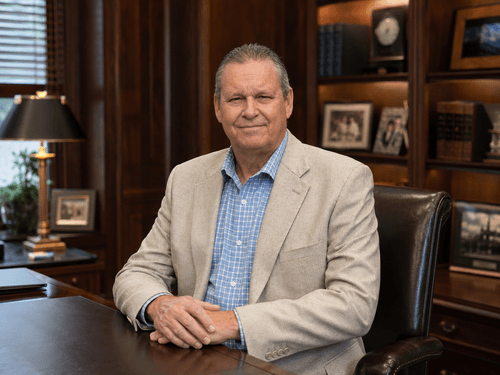
Bernie Ross is the founder of KBR Retirement & Investment Solutions, LLC, an independent, fee-only registered investment adviser in Londonderry, New Hampshire. He has worked in financial services since 1997 and personally handles the planning and services every client relationship. Read more about Bernie.
This article is general information and is not personalized investment, tax or legal advice. It does not consider your individual circumstances. Consult your CPA or attorney on tax and legal matters. Advisory services are offered through KBR Retirement & Investment Solutions, LLC, a registered investment adviser. Registration does not imply a certain level of skill or training. See Disclosures.
Nashua is twenty minutes from the chart table.
Bring your statements, your Social Security estimate and a tax return. The first conversation costs nothing and commits you to nothing.