Seven Signs You Need a Fiduciary Advisor Before Retirement
Accumulation is the open-water crossing with the wind behind you. The approach to harbor is where the margins get thin. Here are the signs it is time to stop navigating alone, and the honest case for when you still can.
What are the signs I need a fiduciary financial advisor for retirement rather than managing on my own?
The signs are structural, not emotional: you are within five to ten years of retirement and have not modeled the decisions; your savings sit in several accounts no one is steering as one income strategy; your taxes have become a sequence of interacting choices; you cannot say with numbers whether the money will last; a major life change has arrived; market moves are driving your decisions; or the pieces (income, taxes, Social Security, healthcare, estate) are being handled separately or not at all.
Spending savings is a different job from building them.
For most of your working life the plan was save, invest, repeat. The approach to retirement introduces decisions that self-directed investors rarely see coming.
Once a portfolio becomes a source of income, every decision carries more weight and most cannot be reversed. Withdrawal sequencing: which account first, and in what order. Social Security claiming: when, and what it does to the tax bracket and the survivor's income. Healthcare: the bridge to Medicare, enrollment windows, the premium surcharge that looks back two years. Tax bracket management: Roth conversions, required minimum distributions, capital gains. None of these was part of the job while a paycheck was arriving.
A fiduciary adviser is legally required to act in your best interest across the whole relationship: duties of care and loyalty under the Investment Advisers Act, with conflicts disclosed. Not everyone called a financial advisor meets that standard. Securities representatives operate under Regulation Best Interest, which requires acting in your interest when a recommendation is made but does not carry the same ongoing duty. For decisions that are permanent, the standard that covers the relationship is the one to ask for, and to get in writing.
Seven signs the approach has outgrown self-management.
Any one of these is a reason to take soundings. Three or more is the answer.
You are within five to ten years of retirement
This is the window where the decisions stop being theoretical. Social Security claiming, the health-coverage bridge to Medicare, Roth conversions in lower-income years and a gradual shift of the portfolio toward withdrawals are all time-sensitive and interconnected, and all easier before the last paycheck than after. If you are in this window and have not modeled the decisions together, you are sailing without soundings.
Your finances have become a collection of accounts
A 401(k) from a former employer. An IRA opened years ago. A current workplace plan, a taxable account, a pension, maybe a rental property. Each has its own rules, tax treatment and timing. The question is not whether each is fine on its own; it is whether anyone is steering them as one income strategy. When no one is, the withdrawal order gets decided by whichever account is easiest to reach.
Taxes have become a sequence, not an event
In retirement you choose much of your taxable income by choosing which account to draw from. Required minimum distributions arrive whether you need the money or not. Roth conversions reduce future tax only if timed correctly. Medicare premiums look back two years at your income. Capital gains, charitable giving and the order of withdrawals all compound over decades. If those decisions are being made one at a time, the sequence is costing something. Coordinating them with your CPA is the work; this is not tax advice.
You do not know whether the money will last
Longevity risk is real: twenty or thirty years past the last paycheck is now ordinary. So is sequence-of-returns risk: a market decline in the first years of retirement does more damage than the same decline later, because withdrawals are taken from a shrunken portfolio. If you cannot answer, with numbers, what happens to your income in a bad first year, that is the sign. The answer comes from modeling the plan against a downturn, not from hoping one does not arrive.
A major life change has arrived
Divorce, inheritance, the death of a spouse, a layoff, caring for an aging parent. Each rewrites the financial picture overnight and arrives with weight that makes objective decisions harder. A fiduciary adviser's role in those months is to re-run the numbers, adjust the plan and keep a decision made under stress from undoing years of careful work.
Markets move you more than your plan does
Volatility makes decisions feel urgent. Conflicting advice online makes them feel confusing. The common result is either paralysis or a reactive sale at the bottom. Part of an adviser's job is behavioral: holding the plan when instinct says abandon it. If the last correction changed your allocation, or you lack the time or confidence to keep up with it, that is a sign the plan needs a second set of hands.
The pieces need to be coordinated
Retirement planning extends past investments. Medicare premiums interact with taxable income. A long-term care event reshapes the withdrawal strategy. Estate documents and beneficiary designations have to match the accounts. Insurance needs change when income stops arriving. When each of those is handled by a different professional who never speaks to the others, or by no one, the gaps surface years later when they are most expensive to fix.
When managing it yourself still works.
Not everyone needs an adviser. The question is complexity, not net worth.
Self-management can work when the picture is simple, your financial literacy is high and you have the time to stay on it: one workplace plan, one IRA, Social Security, no pension election, no business interest, no two-state tax question, no care planning on the horizon. Plenty of households fit that description, and for them a low-cost portfolio and a careful withdrawal rate are a reasonable plan.
The limits show up as the moving parts multiply. Each additional account, income source, tax consideration and family circumstance adds an interaction the others have to account for, and keeping current on the rules that govern them becomes a job in itself. The test is not whether you could learn all of it. It is whether you will, every year, with the decisions landing in the meantime.
How to choose the fiduciary adviser, once you have decided you need one.
Three checks, all in the public record, then the questions.
- Registration and disciplinary history on the SEC's Investment Adviser Public Disclosure site and FINRA BrokerCheck
- Compensation in Item 5 of Form ADV Part 2A: fee-only means client fees and nothing else
- Fiduciary status confirmed in the advisory agreement, not only in marketing
- Demonstrated work with people in or near retirement, not only accumulation-phase clients
- Planning that covers income, taxes, Social Security, healthcare and estate, not only the portfolio
- A named person who will still be servicing the relationship in year five
The U.S. Department of Labor's consumer guidance suggests three direct questions: Do you consider yourself a fiduciary? Are you willing to act as a fiduciary with a duty to act solely on my behalf? Are you willing to put that commitment in writing? Add two more: how are you paid, and who will I actually work with over time. Professional designations signal training and are verified with the organization that issues them; registration is what you can enforce. The longer evaluation is in how to know if a financial advisor fits your retirement.
One advisor, from the first meeting on.
KBR is an independent, fee-only fiduciary practice built for the years on either side of the last paycheck.
KBR Retirement & Investment Solutions, LLC is an independent, fee-only registered investment adviser in Londonderry, New Hampshire, serving pre-retirees and retirees across southern New Hampshire and northeastern Massachusetts, in person or by video. Bernie Ross, in financial services since 1997, is the only person who advises clients: he does the planning, handles the 401(k) rollover, answers the phone when circumstances change and reviews the plan years later, coordinating retirement income, taxes, Social Security timing, estate documents and long-term care. Registration and the current Form ADV are linked from Disclosures; the process is described in how the planning process works.
Common questions.
What is the difference between a fiduciary advisor and a regular financial advisor?
A fiduciary adviser is legally required to act in your best interest across the whole relationship, with duties of care and loyalty and full disclosure of conflicts. For an investment adviser representative of a registered investment adviser, that duty comes from the Investment Advisers Act. Other financial professionals are held to Regulation Best Interest, which requires acting in your best interest at the time a recommendation is made but does not carry the same ongoing duty. For decisions that are largely permanent, the duty that covers the relationship rather than the transaction is the one to ask for, in writing.
At what age should I consider hiring a fiduciary financial advisor?
There is no trigger age. The five to ten years before your target retirement date are the window where planning has the most leverage, because Roth conversions, Social Security timing and a gradual portfolio shift are only available while a paycheck still covers your expenses. A divorce, an inheritance, a diagnosis or a layoff can move that window earlier. If you are in it and have not modeled the decisions, that is the sign.
Can a fiduciary advisor help with Social Security and Medicare planning?
Yes, and the two should be planned together. Claiming age, spousal and survivor benefits, Medicare enrollment windows and the income-related premium surcharge all interact with withdrawal order and taxes. A fiduciary adviser whose planning covers the whole picture coordinates them; one who only manages the portfolio may not. Ask which of these the planning covers before you commit.
How much does a fiduciary financial advisor cost?
Fee-only fiduciary advisers charge a percentage of assets they manage, a flat planning fee, an hourly rate or a retainer, with no commissions on top. The fee schedule is in the firm's Form ADV Part 2A. Ask for total cost as a single figure: the advisory fee plus the internal expenses of the investments used and any custody or platform charges.
Is it ever too late to hire a fiduciary advisor for retirement planning?
No. After retirement the work shifts to required minimum distributions, withdrawal sequencing, Medicare premium thresholds, long-term care funding and keeping estate documents and beneficiary designations aligned. The options are fewer than they were five years out, but the decisions still interact, and a market decline is still the moment people make the most expensive mistakes without a plan to hold them to.
What this connects to.
What is retirement income planning, and why start early?
Accumulation versus decumulation, the three risks, and the window that matters.
How to know if a financial advisor fits your retirement
The eight-step evaluation, including red flags and what to get in writing.
Retiring in three years in NH or MA
The 58-to-61 roadmap once you have decided to get help.
About the author
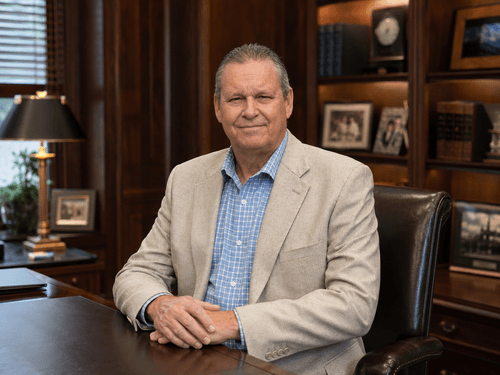
Bernie Ross is the founder of KBR Retirement & Investment Solutions, LLC, an independent, fee-only registered investment adviser in Londonderry, New Hampshire. He has worked in financial services since 1997 and personally handles the planning and services every client relationship. Read more about Bernie.
This article is general information and is not personalized investment, tax or legal advice. It does not consider your individual circumstances. Consult your CPA or attorney on tax and legal matters. Advisory services are offered through KBR Retirement & Investment Solutions, LLC, a registered investment adviser. Registration does not imply a certain level of skill or training. See Disclosures.
If three of the signs fit, take the soundings.
Bring your statements, your Social Security estimate and a tax return. The first conversation costs nothing and commits you to nothing.